This project explores visual storytelling through absence. By designing a subway train cart without human presence and placing a single fishbowl as the focal point, I aimed to shift attention toward atmosphere, contrast, and narrative within a confined 3D environment.
Project Overview
The objective was to explore the contrast between urban routine and organic life through a conceptual subway train cart that uses a fishbowl as a central visual element. The goal was to communicate atmosphere and narrative using 3D space, lighting, and composition rather than dialogue or text.
Software & Technical Skills
Skills Applied:
3D modeling, environment design, lighting, texturing, visual storytelling, concept development, digital prototyping.
Concept
The concept for this project originated from an interest in how absence can be used as a narrative device in digital environments. Instead of relying on human or anthropomorphic figures to communicate a story, I designed an empty subway train cart to allow the environment itself to become the primary storyteller.
The fishbowl was introduced as the focal element to create contrast between the rigid, industrial nature of public transportation and the fragile, organic presence of life contained within glass and water. I intended for this contrast to guide all major design decisions, including composition, material choices, and lighting.
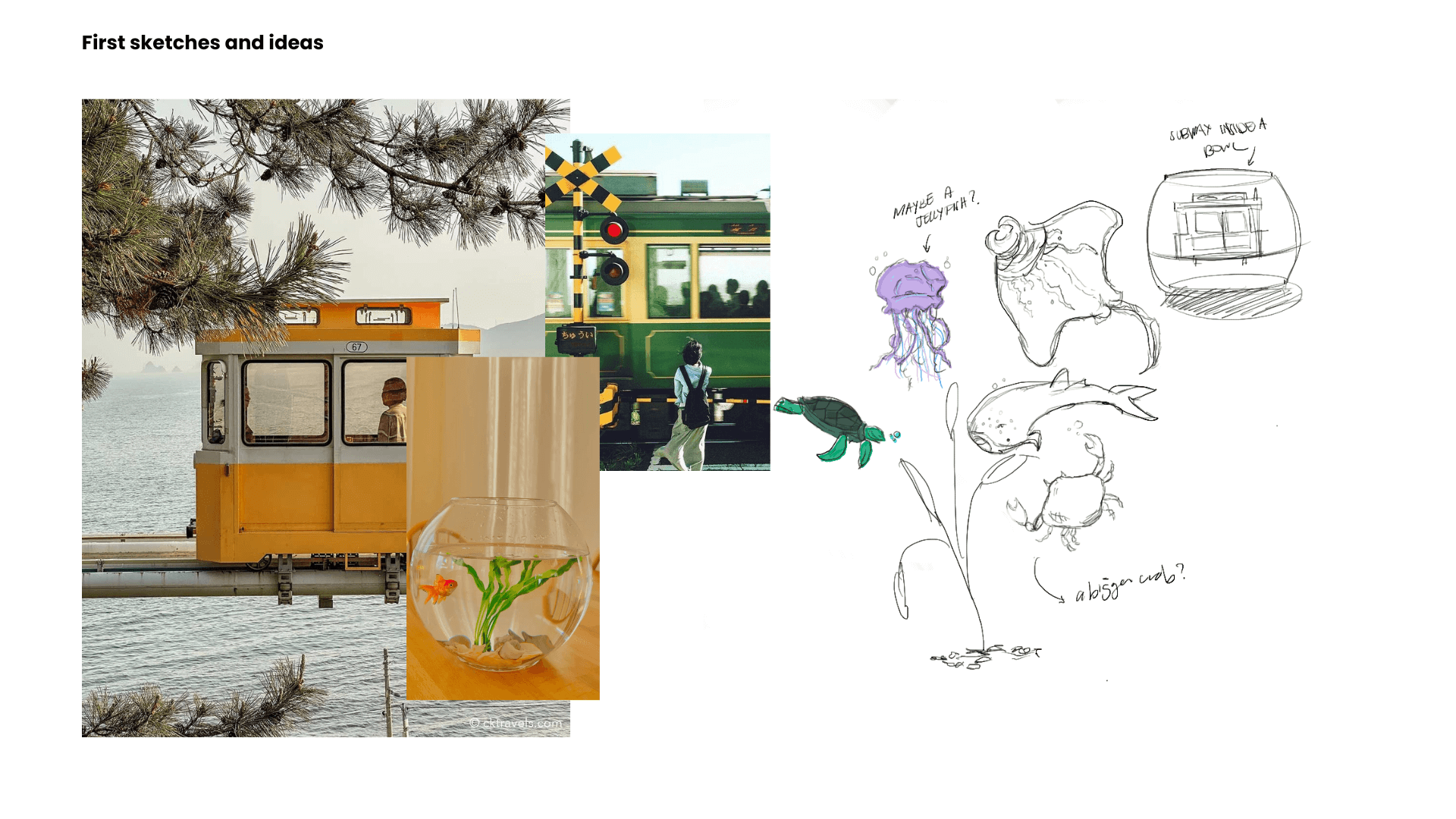
During the ideation phase, I explored multiple placements and scales for the fishbowl through sketches. These iterations helped determine how the object could naturally draw the viewer’s attention. Camera angles were tested early to ensure the fishbowl remained the visual anchor without overwhelming the rest of the environment.
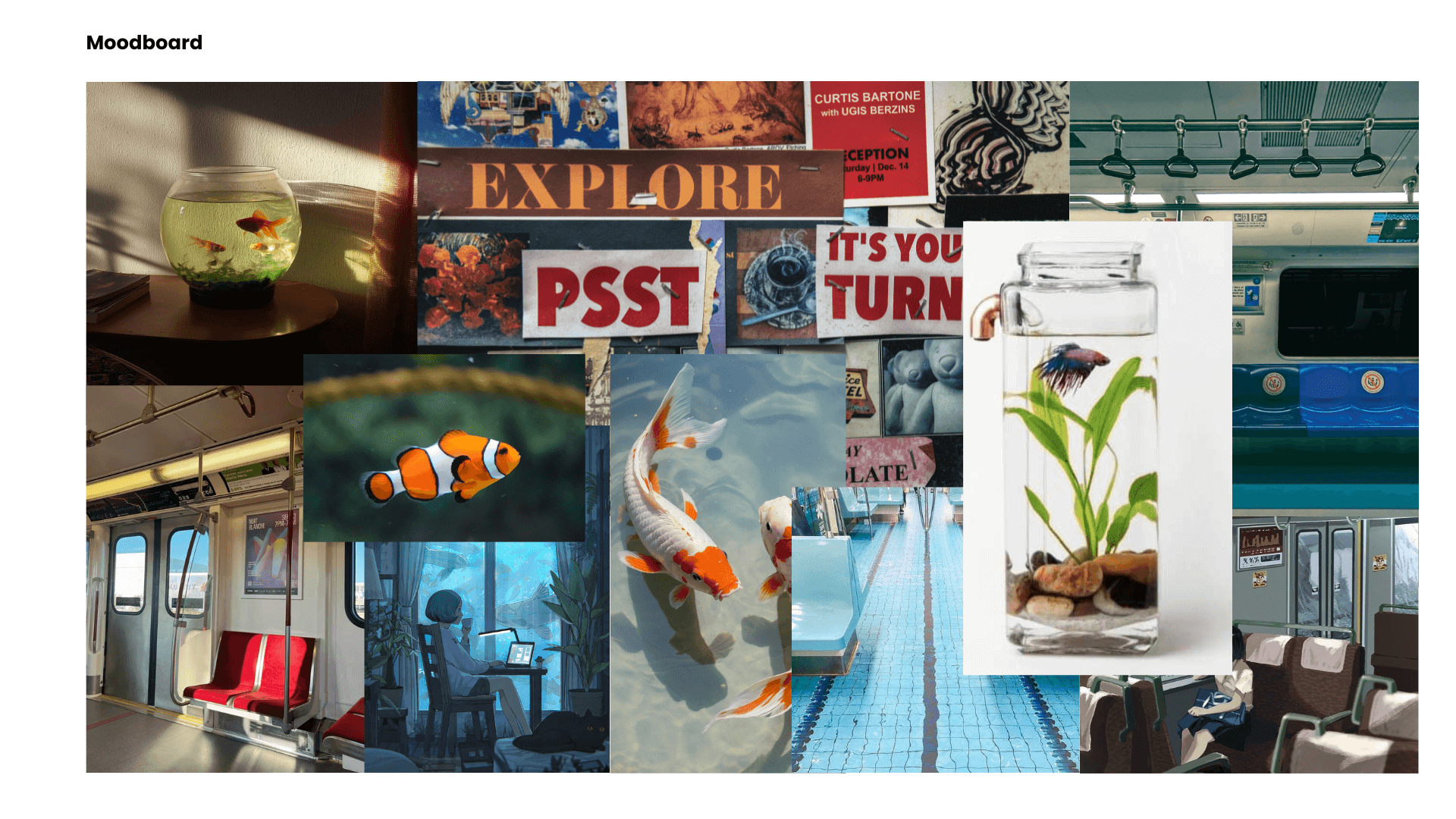
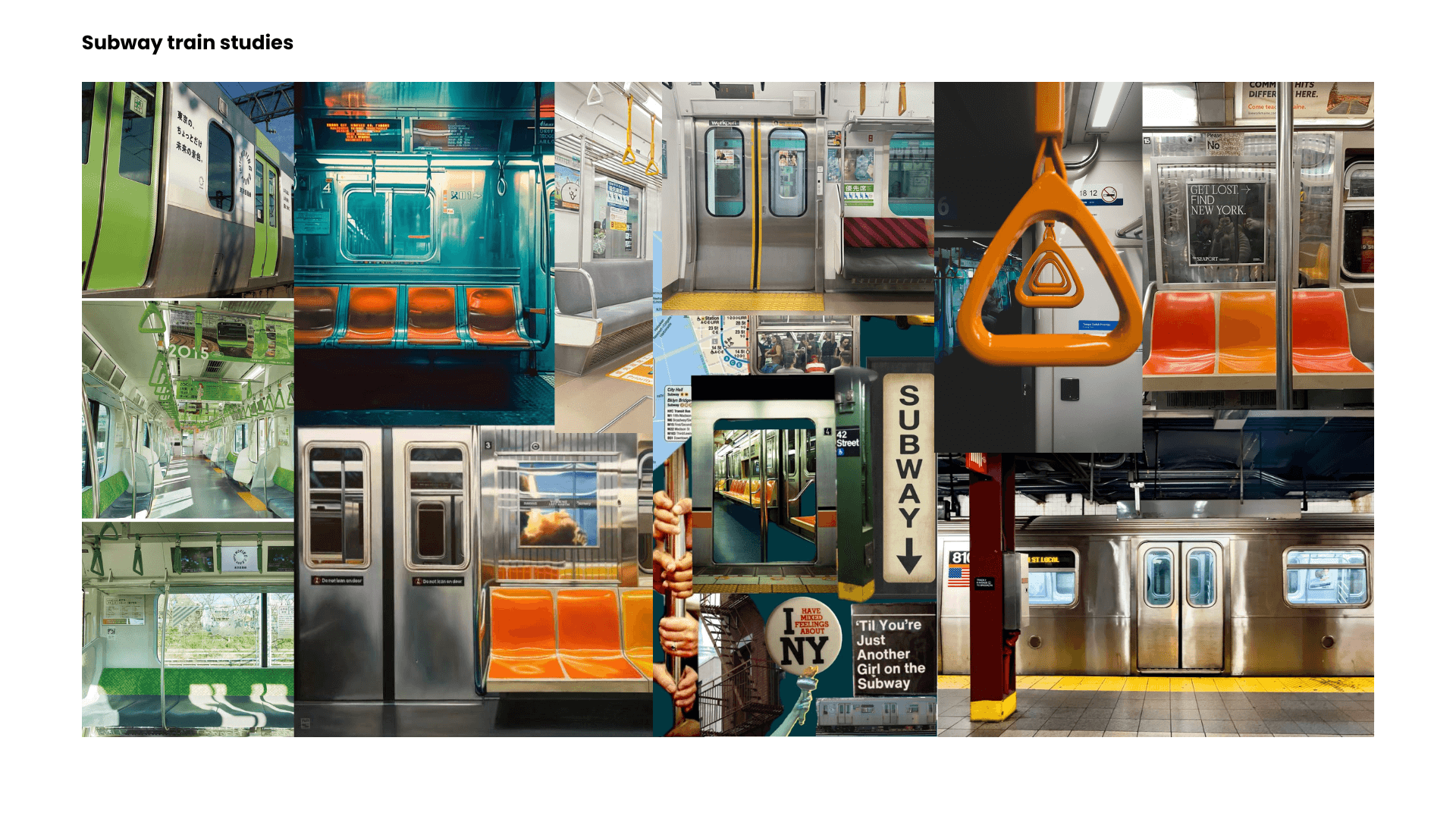
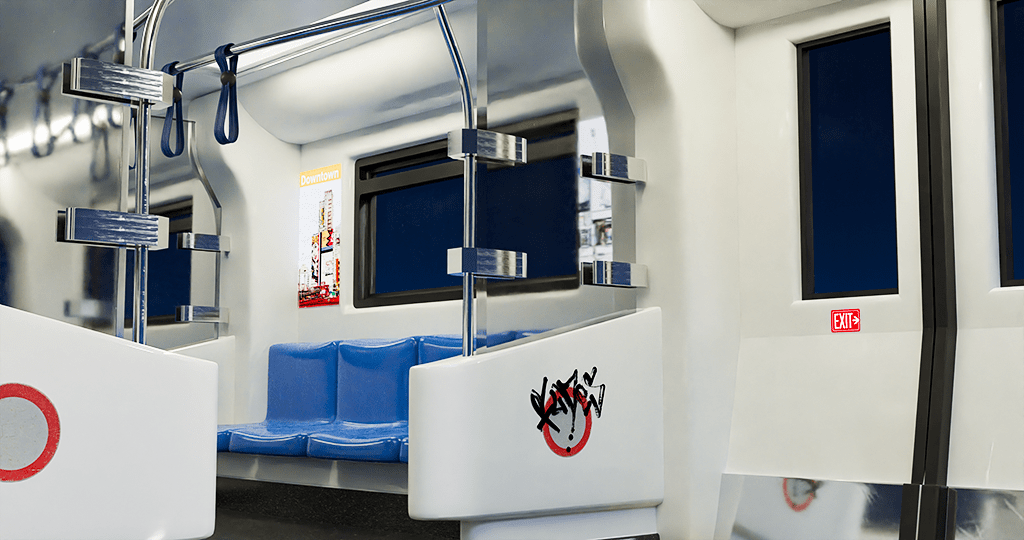
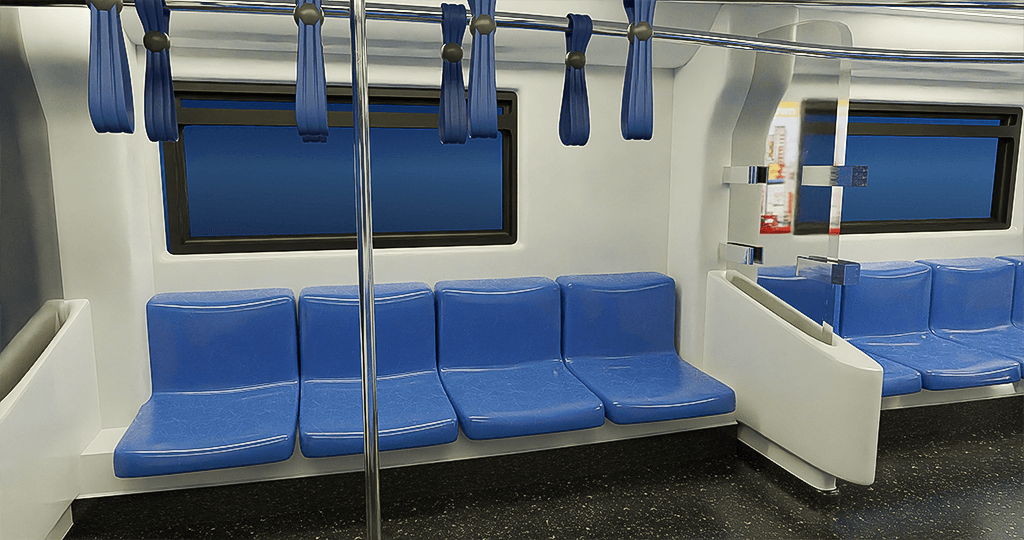
Reference research focused primarily on Japanese subway car interiors, known for their minimalism, cleanliness, and efficient use of space, with secondary inspiration drawn from New York subway cars. Reflective surfaces, controlled lighting, and subtle underwater-inspired illumination informed the material choices. Real-world references helped ground the environment in realism while preserving a slightly surreal quality, allowing the space to feel familiar yet intentionally unsettling.
Project Pipeline & Pipeline
Concept research – Sketches – Whitebox – Detailed modeling – Texturing – Lighting – Final renders
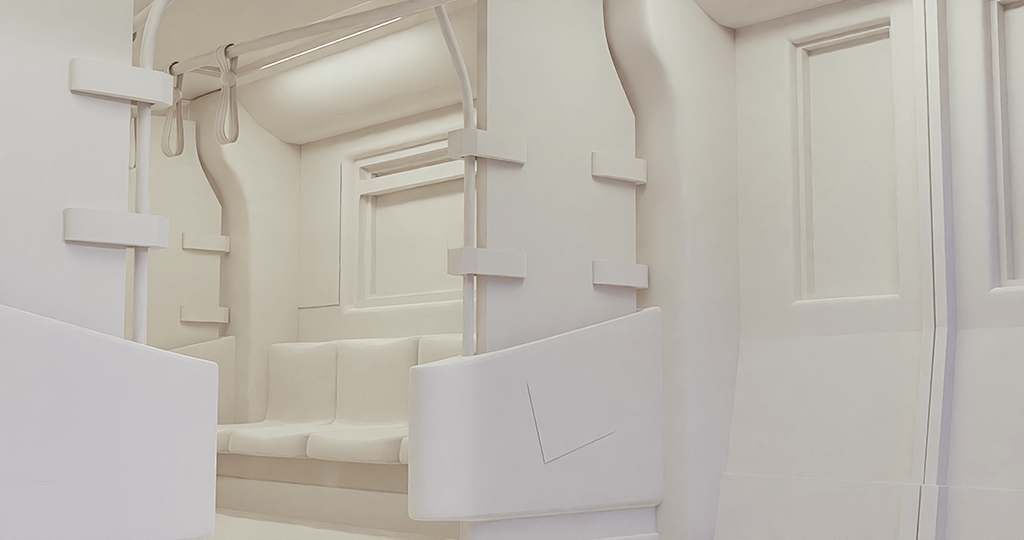
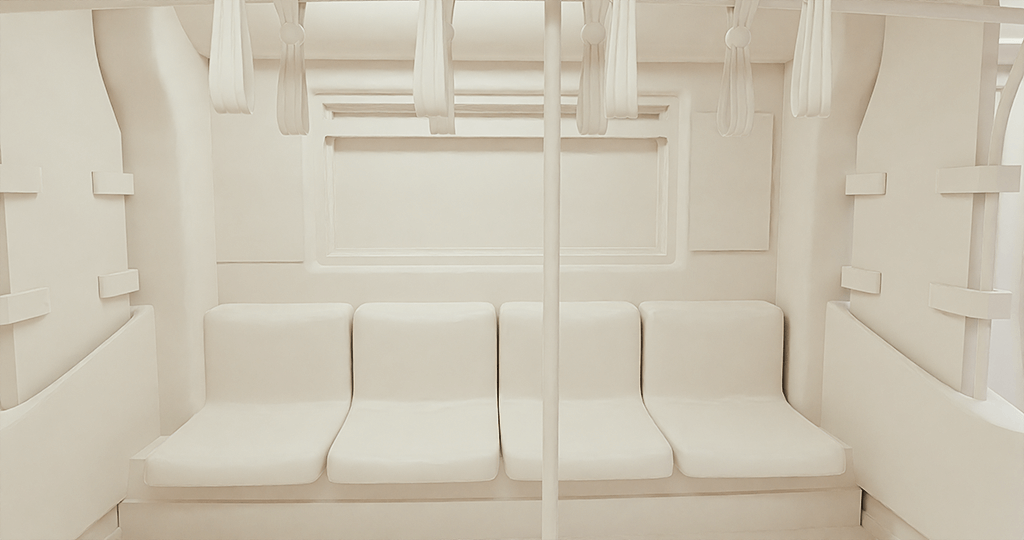
The whitebox focused on clean geometry and accurate proportions, serving as the structural foundation for a production-ready subway car.
Lighting iterations were used to emphasize reflections, transparency, and the focal point of the fishbowl within the confined subway space. This structured approach allowed me to refine the environment through multiple iterations, improving narrative impact.
Animation
In addition to the still renders, I developed a short animation to explore the environment. The animation focuses on small character action (the fishbowl), maintaining the absence of human presence while allowing the viewer to experience the space as a sequence.